Skip to content
minShelfminShelf.com
GroupsFeedHomeAI-dentifyFeedback
Epithermal Quartz Vein with Adularia and Sulfide Inclusions - minShelf
Epithermal Quartz Vein with Adularia and Sulfide Inclusions
J
@jcg

Jcg·19 Jun 2026

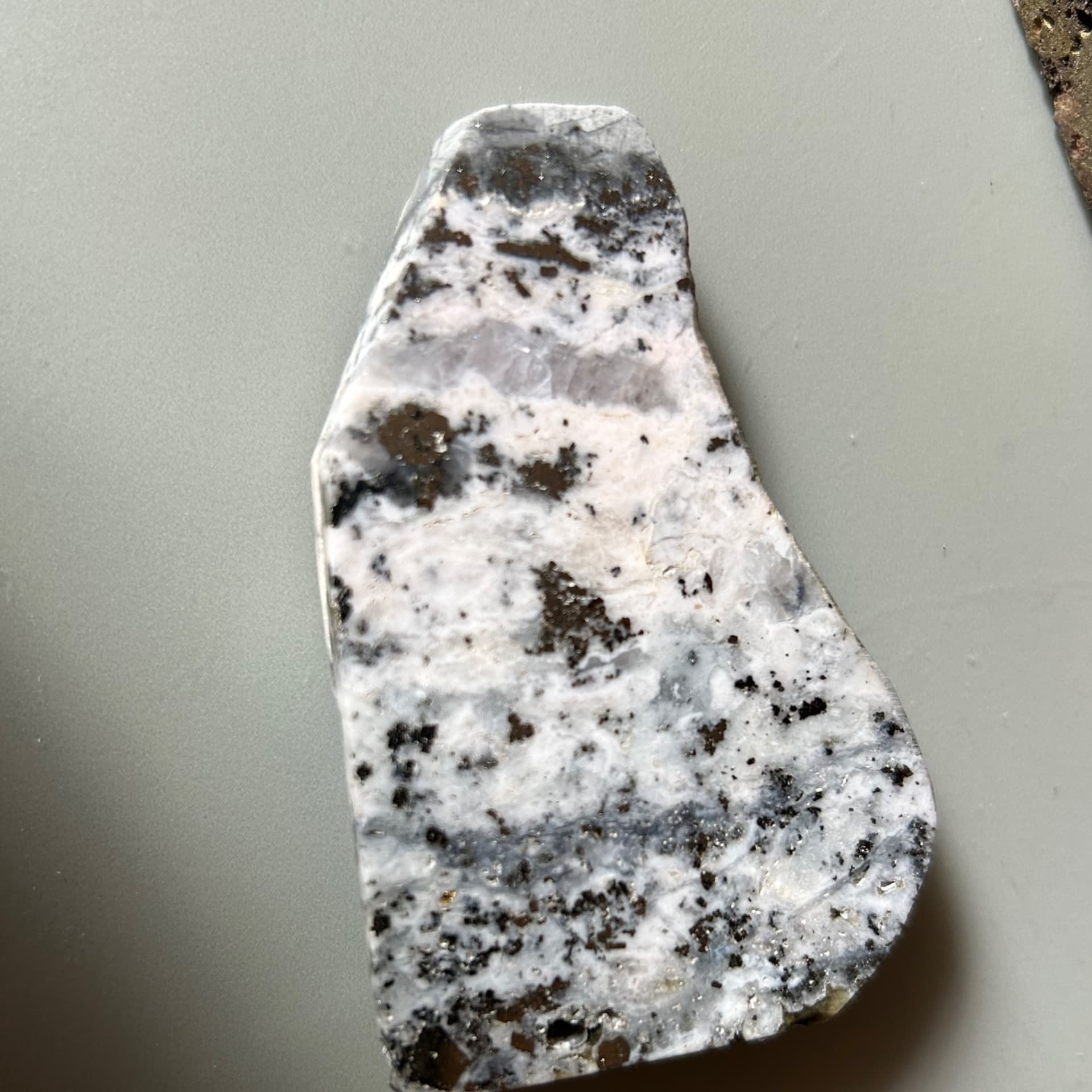
Epithermal Quartz Vein with Adularia and Sulfide Inclusions

AI-suggested ID

Zacatecas, Mexico

The collector's 'epithermal quartz vein' call is reasonable and consistent with the visible features. The brown patches likely represent limonite/goethite after pyrite oxidation — a classic epithermal weathering signature. Test for gold/silver with an acid scratch test or assay if sourced from a known mining district. No diagnostic banding seen here but texture fits.

oreEpithermal

Formation

Formed by silica-rich hydrothermal fluids precipitating quartz ± adularia ± calcite in shallow crustal fractures (< 1.5 km depth, 150–300 °C), often associated with volcanic arc settings and low-sulfidation gold-silver systems.

Geological origin

Comstock Lode, Nevada, USA

Properties

color

white with dark brown-black speckling

grade

Unknown — visual only, assay required

gangue

Quartz, adularia, possible calcite

commodity

Gold, Silver (potential)

host rock

Volcanic / sub-volcanic country rock (inferred)

alteration

Silicic

Where else to find

Waihi, New Zealand (Hauraki Goldfield)Creede, Colorado, USACerro Rico, Potosí, BoliviaSulphur, Nevada, USAGuanajuato, MexicoLihir Island, Papua New Guinea

Suggested tests

  • • Acid test (dilute HCl): no reaction confirms quartz dominant over calcite gangue
  • • Check hardness with a steel file (~6.5) — true vein quartz will resist scratching
  • • Examine brown patches under 10× loupe for boxwork limonite texture (after pyrite) — classic epithermal signature
  • • UV shortwave lamp: calcite gangue fluoresces pink/orange; quartz does not — helps identify gangue mineralogy

Could also be

Pegmatitic Quartz-Feldspar Vein - White feldspar (likely albite or orthoclase) with dark accessory minerals could easily mimic an epithermal quartz vein; pegmatites commonly display this white-on-dark mottled texture
Hydrothermal Quartz-Carbonate Vein - White milky quartz with brown iron-carbonate alteration and fine black sulfide speckling is common in mesothermal orogenic gold vein systems, which can superficially resemble epithermal material
Granite / Leucogranite - The most common look-alike for beginners — white feldspar matrix with black biotite/hornblende speckling in a crystalline groundmass can look similar to a quartz vein at hand-specimen scale
prospecting-indicatocrushed-silica-aggredisplaycabinet-specihistorical-flux-smel
0

Comments (0)