Skip to content
minShelfminShelf.com
GroupsFeedHomeAI-dentifyFeedback
Tourmalinized Breccia - minShelf
Tourmalinized Breccia
J
@jcg

Jcg·18 Jun 2026

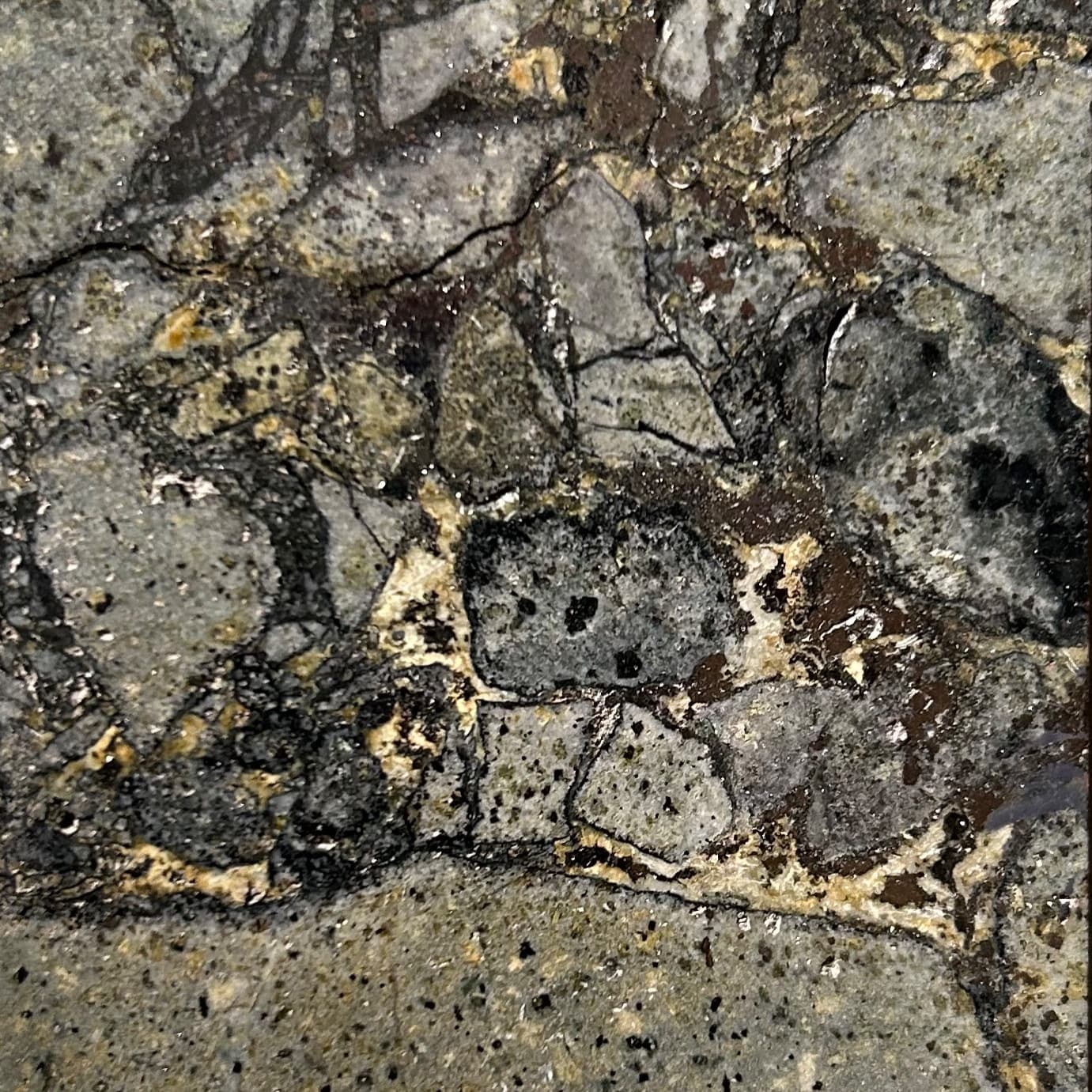
Tourmalinized Breccia

AI-suggested ID

Junín, Peru

The collector's guess of tourmaline-chalcopyrite breccia is plausible. Tourmaline alteration is strongly supported by the black acicular mineral rims. The dark metallic phase could be chalcopyrite but may equally be pyrite or Fe-oxides — a fresh face and streak test would help. Worth examining under UV and hand lens for sulphide crystal form.

other

Formation

Hydrothermal breccia formed during boron-rich fluid infiltration, typically in greisen or skarn systems associated with granitic intrusions. Tourmaline crystallises along fractures and clast margins during metasomatic replacement.

Geological origin

Cornwall, England

Properties

color

grey with dark brown patches

Where else to find

Yilgarn Craton, Western AustraliaPanasqueira, PortugalMinas Gerais, BrazilTimmins, Ontario, CanadaErzgebirge, Germany/Czech Republic

Suggested tests

  • • Streak the dark metallic patches on unglazed porcelain — chalcopyrite gives greenish-black, pyrite gives greenish-black too, but goethite/limonite gives yellow-brown
  • • Check the metallic phase with a hand lens for cubic crystal form (pyrite) vs. irregular massive habit (chalcopyrite)
  • • Test hardness of the grey clast material — should resist a steel knife if silicified (>6.5), confirming quartz/tourmaline dominance
  • • Examine under shortwave UV — tourmaline is typically inert; fluorite or calcite alteration minerals may fluoresce blue/yellow and indicate gangue type

Could also be

Tourmaline-Pyrite Breccia - The dark metallic patches could be pyrite or pyrrhotite rather than chalcopyrite — sulphide phases are difficult to distinguish without a polished surface and fresh exposure
Hydrothermal Silica-Iron Breccia - Common look-alike: quartz-cemented breccia with Fe-oxide staining can mimic tourmalinized textures without the boron alteration halo
Greisen Breccia - Greisen alteration (quartz-topaz-tourmaline) in granitic systems produces very similar grey angular clasts with dark mineral rims and yellowish altered matrix
indicator-hydrothermcollector-specimen-wpetrographic-study-m
0

Comments (0)