Skip to content
minShelfminShelf.com
GroupsFeedHomeAI-dentifyFeedback
Flint / Chert - minShelf
Flint / Chert
N
@nykolrocks

NykolΒ·28 Jul 2026

Flint / Chert

AI-suggested ID

Seine-Maritime, France

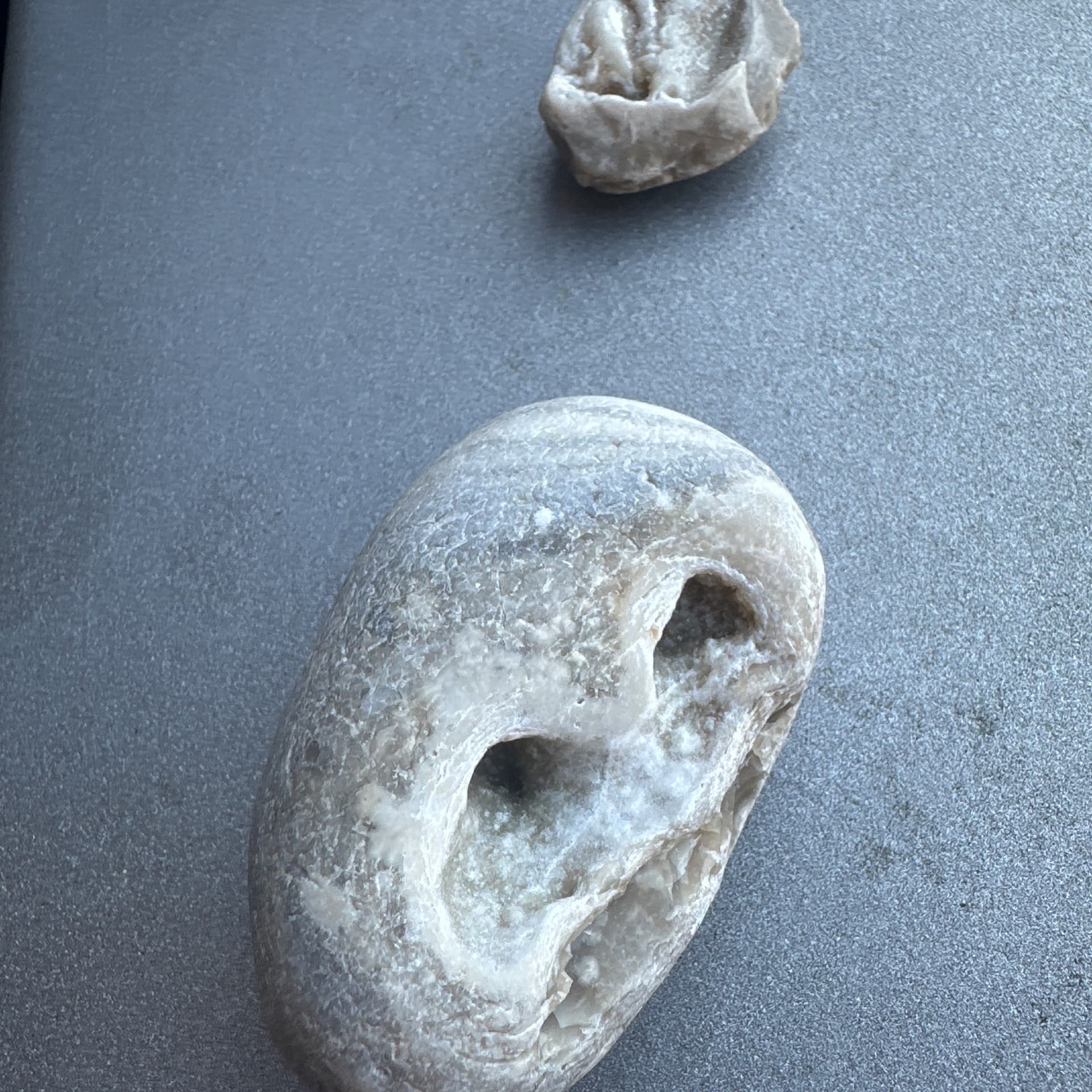
The collector's guess of flint is very reasonable. The white chalky cortex and rounded nodule form are classic for flint weathered from chalk. The hollow depression on the large specimen is intriguing β€” break it open carefully for a fresh face. Look for a sharp conchoidal fracture and glassy grey-brown interior to confirm.

sedimentarysmalltumbledself-collected

Formation

Flint forms as diagenetic silica nodules within chalk and limestone, precipitated from silica dissolved from sponge spicules and radiolarian tests during burial. Nodules weather out and are transported by rivers or glacial action.

Geological origin

Chalk Downs, Southeast England

Properties

class

Chemical

color

pale cream white

texture

Crystalline

structure

Massive

grain size

Cryptocrystalline (<0.01 mm)

composition

Microcrystalline silica (SiOβ‚‚); formed as diagenetic nodules within chalk; white weathering cortex of porcellanite

Where else to find

Normandy coast, FranceDanish and German Baltic coastlinesNegev Desert, IsraelOzark Plateau, Missouri, USATexas Hill Country, USA

Suggested tests

  • β€’ Strike the specimen against steel β€” flint will produce sparks and a sharp ringing sound
  • β€’ Test hardness: flint should easily scratch glass (hardness ~7) and resist a steel nail
  • β€’ Apply a drop of dilute HCl acid β€” no fizzing confirms silica (not calcite concretion)
  • β€’ Break or chip a corner carefully β€” look for a glassy, conchoidal fracture surface and dark grey-brown interior beneath the white cortex

Could also be

Chalcedony nodule - Chalcedony forms smooth, waxy, rounded nodules very similar in appearance; the weathered white cortex and smooth botryoidal inner surfaces are consistent with chalcedony, which is essentially the same microcrystalline silica family as flint/chert
Calcite concretion - Pale, rounded, pitted concretions can look very similar; calcite is much softer (Mohs 3) and would fizz with acid β€” a key distinguishing test
Quartz geode (partial) - The hollow depression or cavity visible on the larger specimen, with smooth interior walls, could indicate a partially opened geode or vug, which is common in chert/flint nodules that weather out of chalk
prehistoric-tool-makfire-starting-strikiaggregate-road-surfahistorically-gunflincollector-decorative
0

Comments (0)